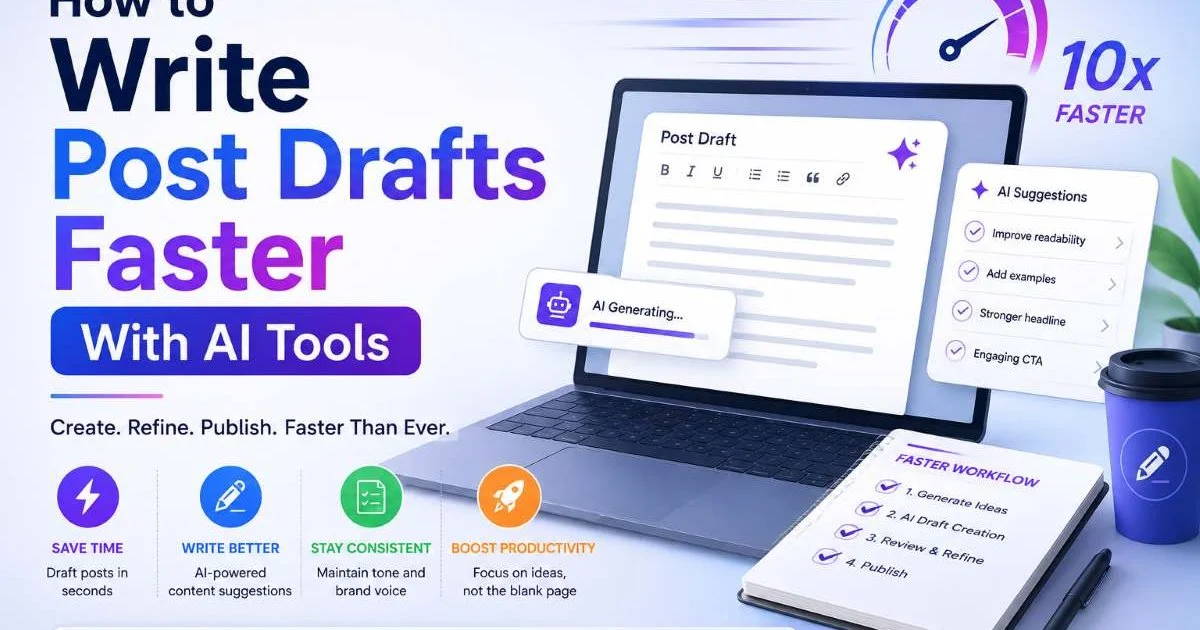
To write post drafts means to create preliminary versions of blog articles or social media updates that communicate a specific message to a defined audience with purposeful structure and tone. For bloggers and content creators, this skill sits at the foundation of every successful content strategy.
Without a solid draft, even brilliant ideas fall flat because they lack direction, coherence, or the kind of wording that actually resonates with readers. The ability to write post drafts efficiently separates hobbyist creators from professionals who build loyal audiences. Think of drafting as the architectural blueprint phase of content creation. You would not build a house without a plan, and publishing without a draft carries the same risk.
Mastering this process means fewer rewrites, stronger engagement, and a consistent publishing schedule that keeps your audience coming back.
Key Takeaways
- Drafting is the structured process of turning raw ideas into publish-ready content.
- Strong blog post structure keeps readers scrolling instead of bouncing away immediately.
- Audience-focused content performs better than generic writing across every platform and format.
- Social media copywriting requires different techniques than long-form blog drafting does.
- Using templates and frameworks accelerates drafting without sacrificing originality or voice.

What Does It Mean to Write Post Drafts?
A post draft is any preliminary version of written content created before final publication. It could be a 2,000-word blog article, a 280-character tweet, or a LinkedIn carousel script. The common thread is intentionality: a draft takes a raw concept and shapes it into something that speaks to a specific reader. Unlike freewriting or brainstorming, a draft has direction. It follows a framework, addresses a reader's need, and builds toward a point. The drafting stage is where your clear messaging tips start to materialize into actual sentences.
The Anatomy of a Draft
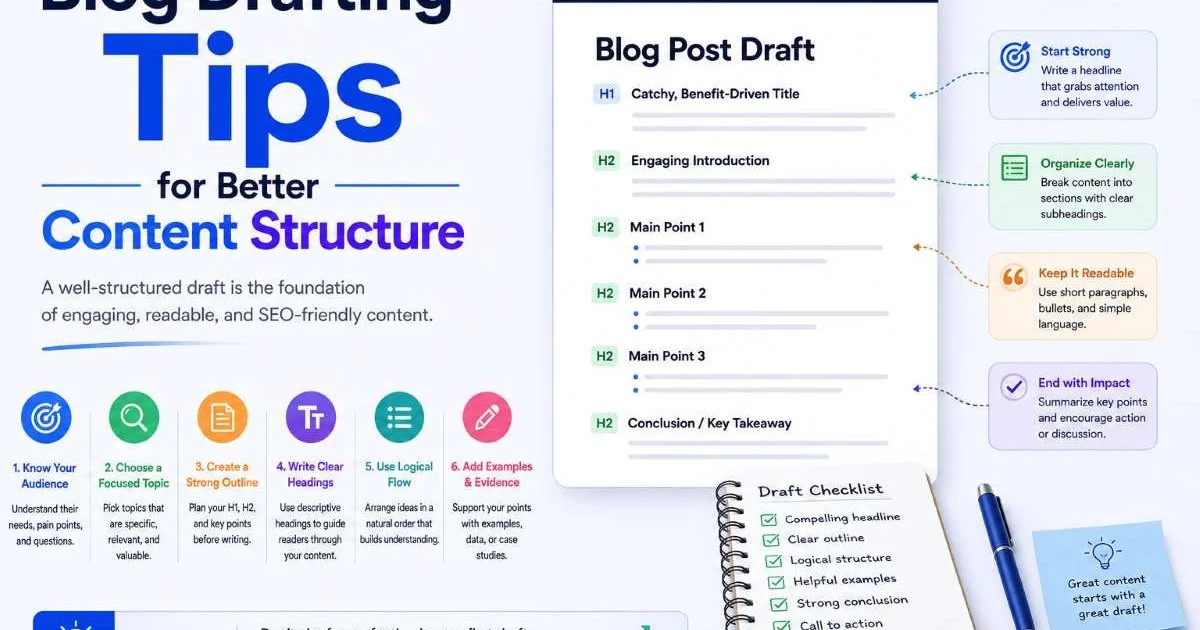
Every effective draft contains three core elements: a hook, a body, and a resolution. The hook grabs attention, whether that is a bold claim, a surprising statistic, or a relatable question. The body delivers value through organized sections, examples, and supporting data. The resolution ties everything together with a takeaway or call to action. This pattern holds true whether you are writing a 1,500-word article or a 150-word Instagram caption. Understanding this framework lets you write post drafts faster because you always know what comes next.
Drafting for Blogs vs. Social Media
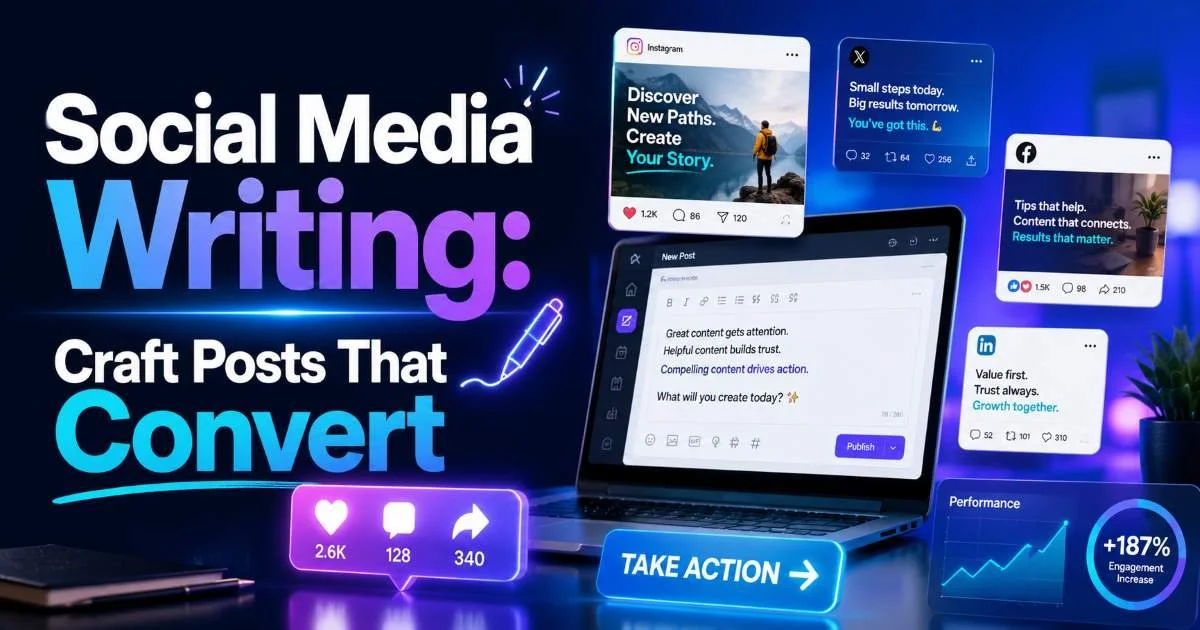
Blog drafting allows for depth. You can explore nuances, provide research, and build layered arguments across multiple sections. A strong blog post structure typically includes an introduction, scannable headings, supporting visuals, and a concluding section. Social media copywriting, by contrast, demands compression. You must deliver value in seconds, not minutes. As SocialBee's glossary explains, a social media post is any piece of content shared on social platforms, and each platform has unique formatting expectations that shape how you draft.
The drafting approach for each format changes too. Blog drafts benefit from detailed outlines and iterative editing passes. Social media drafts often start as quick-hit ideas that get refined for tone, hashtags, and platform-specific character limits. Despite these differences, both require the same foundational skill: the ability to identify what your audience needs to hear and then organize that message into the right container.
Why Drafting Matters for Creators
Publishing without drafting is like speaking without thinking. You might get lucky sometimes, but more often you will ramble, confuse your reader, or miss your point entirely. Drafting gives you permission to be imperfect on the first pass while guaranteeing that the final product is polished. For bloggers managing editorial calendars with multiple posts per week, a reliable drafting process is the difference between burnout and sustainable output. It also creates a feedback loop: each draft teaches you something about your voice and your audience's preferences.
"A reliable drafting process is the difference between burnout and sustainable output."
Consistency and Quality
Content creators who produce drafts consistently tend to publish higher-quality work. The reason is straightforward: when you separate the creative phase from the editing phase, each one gets your full attention. Trying to write and perfect simultaneously leads to writer's block and mediocre output. Drafting also supports batch creation, where you produce multiple pieces in one focused session and then refine them later. This workflow is especially valuable for social media, where platform algorithms reward regular posting. Following established social media best practices becomes far easier when you have a bank of drafted content ready to polish and publish.
Beyond individual output, drafting supports collaboration. When you work with editors, designers, or clients, a draft serves as a shared reference point. Everyone can see the direction, suggest improvements, and align on messaging before resources go into final production. This prevents costly revisions late in the process and keeps projects on schedule. For solo creators, treating your future self as that collaborator works just as well. Write the draft today, edit it tomorrow with fresh eyes.
Drafting also reduces the pressure of perfectionism. Many creators stall because they want every sentence to be flawless on the first try. A draft-first mindset reframes writing as iterative. Your first version does not need to be good; it needs to exist. Quality comes from revision, not from agonizing over the opening line for an hour. This content drafting guide principle alone can double a creator's output when taken seriously.
Set a timer for 25 minutes and draft without editing. You will produce more usable content than you expect.
How to Write Post Drafts That Connect
Start With Your Audience
Audience-focused content begins with research, not writing. Before you type a single word, identify who you are writing for, what problem they face, and what outcome they want. A fitness blogger writing for beginners needs a completely different tone than one targeting competitive athletes. The words you choose, the examples you pick, and the assumptions you make all shift based on who is reading. Skip this step and your draft will feel generic, no matter how well-structured it is. Spend ten minutes defining your reader persona before each draft.
Once you know your audience, craft your core message in one sentence. This is your "north star" for the entire draft. Every paragraph should either support, illustrate, or build upon that sentence. If a section does not connect back to it, cut it. This discipline keeps your writing focused and your reader engaged from the opening hook through the final call to action. Audience-focused content is not about telling readers what you know; it is about telling them what they need.
Your audience's needs change over time. Revisit your reader personas quarterly to keep your drafts relevant.
Structure Your Message
Good blog post structure is invisible to the reader but shapes their entire experience. Use headings to create a visual hierarchy that lets scanners find what they need. Open each section with the most important information (inverted pyramid style) so even partial readers get value. Within paragraphs, lead with strong topic sentences and follow with evidence or examples. Clear messaging tips like these make your writing accessible without dumbing it down. Your structure should guide the reader naturally from curiosity to understanding to action.
| Content Type | Ideal Length | Sections | CTA Placement |
|---|---|---|---|
| Blog Article | 1,000 to 2,500 words | 4 to 7 H2 sections | End of article |
| LinkedIn Post | 150 to 300 words | Hook, body, CTA | Final line |
| Instagram Caption | 50 to 150 words | Hook, value, CTA | Final line or bio link |
| Twitter/X Thread | 5 to 12 tweets | Hook tweet, numbered points | Last tweet |
| Email Newsletter | 300 to 800 words | Intro, 2 to 3 sections, CTA | Mid and end |
Templates accelerate this process significantly. When you use a proven framework (like the "What Is" explainer, the listicle, or the how-to guide), you skip the structural decisions and focus your energy on the actual writing. Tools like AI Post Generator can help you produce structured first drafts quickly, giving you a starting point that you refine with your unique expertise and voice. The goal is never to automate your creativity but to remove the friction that slows it down.
Keep a swipe file of your best-performing post structures and reuse the frameworks for future drafts.
Common Misconceptions and Related Concepts
Myths About Drafting
The biggest misconception about drafting is that it wastes time. Creators who skip drafting and publish stream-of-consciousness content almost always spend more time fixing errors, responding to confused readers, or rewriting pieces that missed the mark. Drafting is not an extra step; it is the step that makes every other step easier. Another myth is that drafts need to be nearly perfect. They do not. A draft riddled with typos and placeholder sections still provides a structural foundation that is faster to refine than a blank page.
Publishing a first draft without any revision often damages credibility. Always review at least once before posting.
Some creators believe drafting only applies to long-form blog content. This is false. Even a single tweet benefits from a quick draft-and-review cycle. The difference between a tweet that gets 5 likes and one that gets 500 often comes down to word choice, rhythm, and timing, all of which improve with even 60 seconds of revision. Social media copywriting is still copywriting, and copywriting is a craft that rewards iteration.
Related Concepts
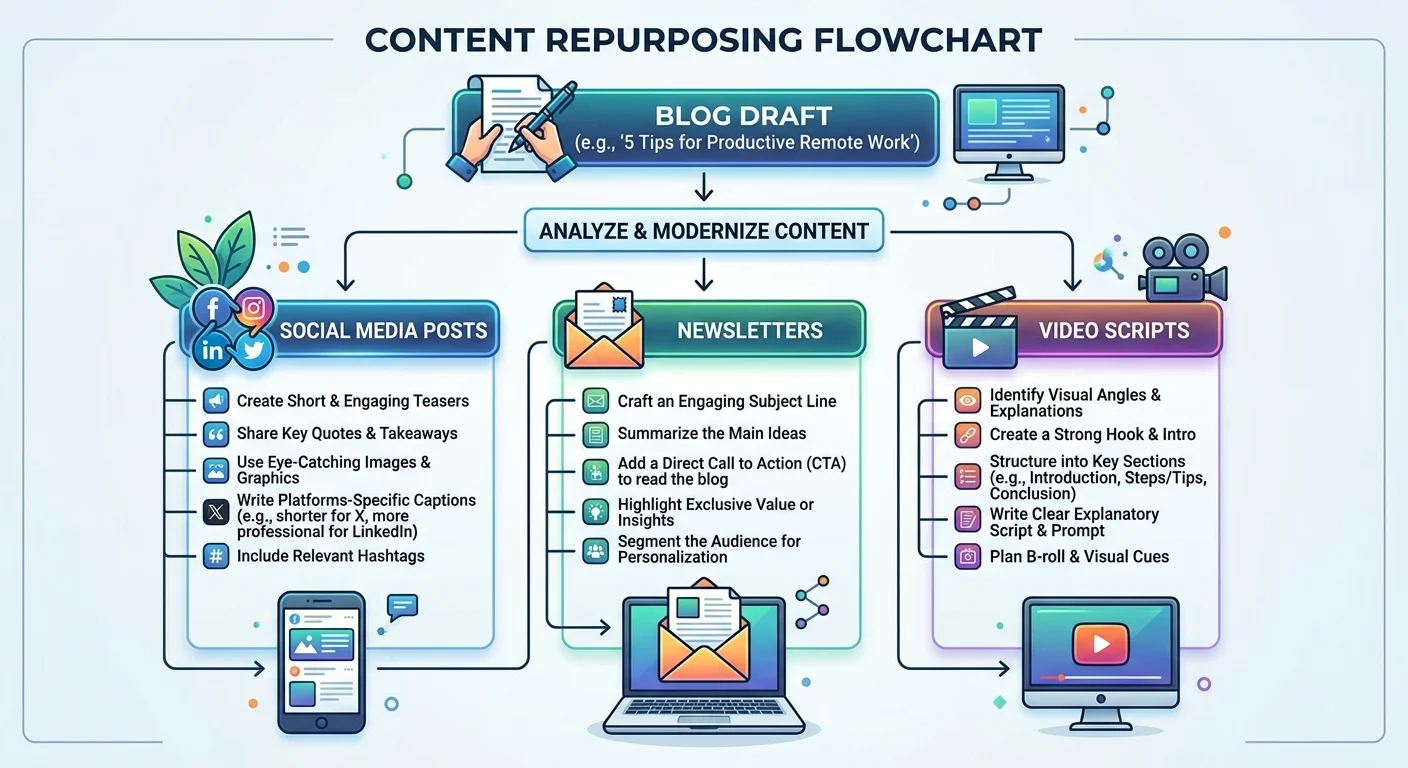
Drafting sits within a broader content creation ecosystem. Content strategy defines what you create and why. Editorial planning schedules when each piece publishes. Drafting is the execution layer where strategy becomes words on a screen. Closely related skills include copywriting (persuasive writing for conversions), content editing (refining drafts for clarity and accuracy), and content repurposing (transforming one draft into multiple formats). A single well-drafted blog post can become a LinkedIn article, an email newsletter, a Twitter thread, and an Instagram carousel.
Understanding how these concepts connect helps you write post drafts more strategically. You stop thinking of each piece as isolated and start seeing your drafts as modular assets. A blog draft becomes raw material for an entire week of social content. An Instagram caption draft becomes the seed for a longer article. This mindset shift, from single-use writing to modular drafting, multiplies your output without multiplying your effort. It is the closest thing to a productivity multiplier that content creation offers.
Frequently Asked Questions
?How do I apply the hook-body-resolution framework to a short social post?
?Is drafting a blog post the same process as drafting for LinkedIn or Instagram?
?How long should it realistically take to write a solid blog post draft?
?Does using AI to write post drafts hurt your original voice or audience connection?
Final Thoughts
Learning to write post drafts with intention, structure, and audience awareness transforms content creation from a chaotic scramble into a repeatable system. The process does not require perfection on the first pass. It requires clarity about who you are writing for and what you want them to take away.
Whether you are drafting a 2,000-word blog post or a 100-word social update, the principles remain the same: know your reader, organize your message, and refine before you publish. Start treating your drafts as the foundation of your content workflow, not an afterthought, and the quality of everything you publish will follow.
Disclaimer: Portions of this content may have been generated using AI tools to enhance clarity and brevity. While reviewed by a human, independent verification is encouraged.