Writing social media posts that actually drive clicks, signups, and sales is a skill most bloggers and content creators struggle to master. You can spend hours drafting content for Instagram, LinkedIn, or X, only to watch it flatline with zero engagement. The difference between a post that converts and one that gets scrolled past often comes down to structure, word choice, and understanding your audience's psychology.
This guide walks you through a practical, step-by-step process for social media writing that turns passive scrollers into active customers. Whether you're promoting a blog post, a product, or a service, these techniques apply across every major platform. If you've been looking for content creation tips to streamline your workflow, you'll find plenty here. We'll cover everything from audience research to post structure to AI-assisted drafting. By the end, you'll have a repeatable framework you can use today.
Key Takeaways
- Every converting social media post follows a proven structural formula you can replicate.
- Writing for social media requires shorter sentences and stronger hooks than blog writing.
- AI tools can accelerate your drafting process without sacrificing authenticity or voice.
- Platform-specific formatting dramatically affects how many people engage with your content.
- Testing and iterating on your posts is the fastest path to higher conversion rates.

Step 1: Understand Your Audience Before You Write
Build a Reader Profile
Before you type a single word, you need clarity on who you're writing for. A post targeting freelance designers will sound completely different from one aimed at SaaS founders, even if the core message is the same. Start by listing three to five specific pain points your audience faces daily. For bloggers, that might include low engagement rates, inconsistent posting schedules, or difficulty generating fresh ideas. The more specific your understanding, the more targeted your copy becomes.
Go beyond basic demographics. Age and location tell you almost nothing about what makes someone click a link or share a post. Instead, focus on psychographics: what does your reader fear? What does success look like for them? What language do they use in comments, forums, and DMs? Spend 20 minutes reading through the comments on competitors' top-performing posts, and you'll uncover exact phrases your audience uses to describe their problems.
Screenshot real comments from your audience and keep them in a "Voice of Customer" document for reference when writing.
Research What Performs
Pull up the last 30 days of your social media analytics and identify your top three posts by engagement rate, not just likes. Look for patterns. Did question-based hooks outperform statement-based ones? Did carousel posts get more saves than single images? This data is more valuable than any generic best-practices article because it reflects your specific audience's behavior. If you're starting from zero, analyze five competitors in your niche and reverse-engineer their best-performing content.
Understanding post structure basics every content creator needs will give you a foundation for organizing your research findings. Track which topics, formats, and tones resonate most. Create a simple spreadsheet with columns for post type, hook style, topic, and engagement rate. After two weeks, patterns will emerge that tell you exactly what to write about and how to frame it for maximum response from your followers.
Step 2: Structure Your Posts for Maximum Impact
The Hook-Body-CTA Framework
Every high-converting social media post follows a three-part structure: hook, body, and call to action. The hook is your first sentence, and it needs to stop the scroll within two seconds. Effective hooks often use a surprising statistic, a bold claim, a direct question, or a relatable frustration. "I grew my email list by 400 subscribers from one LinkedIn post" is a hook. "Here are some tips for social media" is not. The hook earns the right to be read; everything else is secondary.
The body of your post delivers on the promise of your hook. Keep sentences short and punchy. Use line breaks generously, especially on mobile-first platforms like Instagram and X. Each sentence should advance the reader toward your CTA, which is the single action you want them to take after reading. That might be clicking a link, dropping a comment, saving the post, or signing up for something. Never end a post without a clear CTA; otherwise, you're just entertaining people for free.
"A post without a clear call to action is a billboard on an empty highway."
Platform-Specific Formatting
Formatting rules vary dramatically across platforms, and ignoring them is one of the fastest ways to kill engagement. On LinkedIn, short paragraphs with single-line breaks outperform dense blocks of text. On X, threading lets you expand on ideas while keeping each individual post tight. Instagram captions that front-load value in the first two lines (before the "more" truncation) consistently outperform those with slow buildups. Understanding these nuances is part of mastering blog drafting for social distribution.
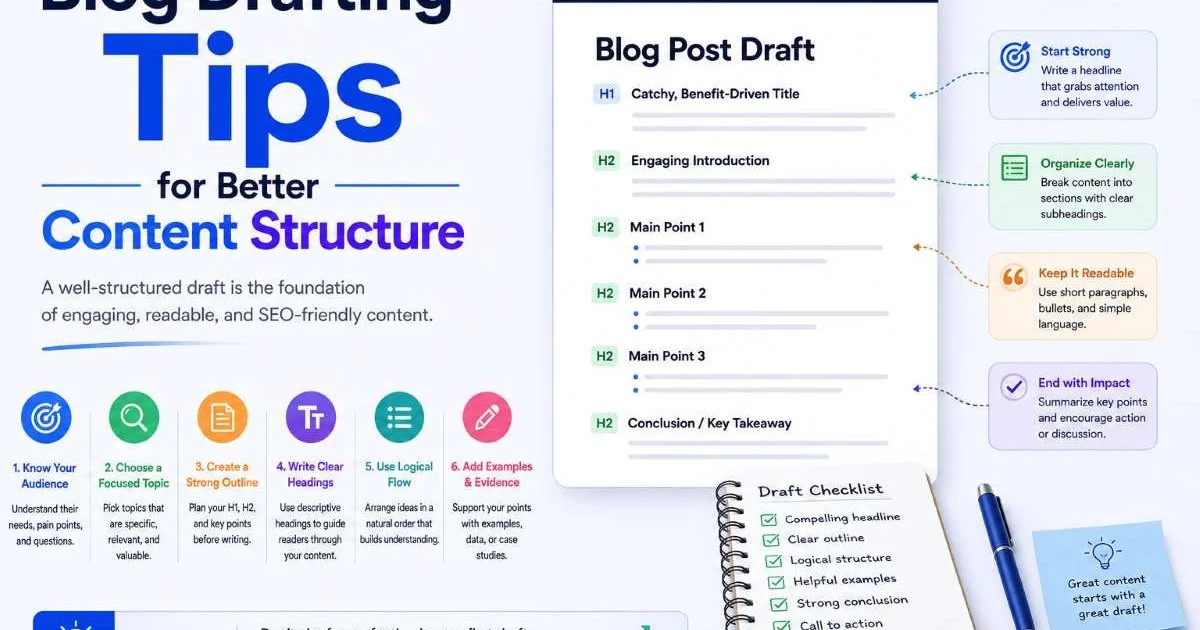
Adapting your writing to each platform doesn't mean creating entirely different content every time. Start with one strong idea and reformat it across channels. A LinkedIn article can become a Twitter thread, which can become an Instagram carousel. This approach saves hours and keeps your messaging consistent. For deeper guidance on structuring your drafts efficiently, check out these blog drafting tips for better content structure.
Step 3: Write Copy That Triggers Action
Power Words and Emotional Triggers
The words you choose directly influence whether someone takes action or keeps scrolling. Research from behavioral psychology shows that certain words trigger emotional responses that drive clicks. Words like "free," "proven," "mistake," "secret," and "instantly" consistently outperform neutral alternatives in social media copy. But word choice alone isn't enough. The emotional context matters just as much. A post about "5 mistakes killing your blog traffic" activates loss aversion, which is a stronger motivator than the promise of gain.
Pair emotional triggers with specificity. "Grow your audience" is vague and forgettable. "Add 500 email subscribers this month using three LinkedIn post templates" is specific and actionable. Specificity builds credibility because it signals that you've actually done the thing you're recommending. Numbers, timeframes, and named tools all add concrete detail that generic advice lacks. When you write post drafts, always ask yourself: "Could someone act on this sentence right now?" If not, rewrite it with more precision.
Replace every adjective like "great" or "amazing" with a specific number or result. "Great results" becomes "a 34% increase in click-through rate."
Write Drafts Faster With AI
AI writing tools have transformed how creators produce social media content. Instead of staring at a blank screen, you can generate multiple draft variations in minutes and then refine the best one with your personal voice. The key is treating AI as a starting point, not a finished product. The best creators use AI post draft generation to build rough frameworks, then inject their own stories, opinions, and data. This hybrid approach produces content that feels authentic while dramatically reducing production time.
If you want to explore how to write post drafts faster with AI tools, the process is straightforward. Feed the tool your hook idea, target audience, and desired CTA. Review the output, strip out anything generic, and add a personal anecdote or specific result. You can also explore the best AI social media manager tools for scheduling and analytics alongside your writing workflow. The combination of fast drafting and smart scheduling can cut your content creation time in half while improving consistency.
AI-generated posts that aren't edited for voice and accuracy often feel robotic. Always add a personal touch before publishing.
Step 4: Test, Measure, and Iterate
What to Track
Publishing a post is not the finish line. It's the starting point for learning what works. Track three metrics for every post: engagement rate (likes, comments, shares divided by impressions), click-through rate (if you included a link), and conversion rate (signups, purchases, or whatever your CTA requested). Most creators only look at vanity metrics like total likes. But a post with 50 likes and 20 link clicks is far more valuable than one with 500 likes and zero clicks. The metrics you track should align with your actual business goals.
Run simple A/B tests by posting two versions of similar content at similar times on different days. Change one variable at a time: the hook, the CTA, the format, or the time of day. After 10 to 15 tests, you'll have statistically meaningful data about what your audience prefers. Document every test in your content spreadsheet. Over time, this becomes your personalized playbook for media writing that converts, something no generic guide can replicate because it's built on your unique audience data.
Build a Swipe File
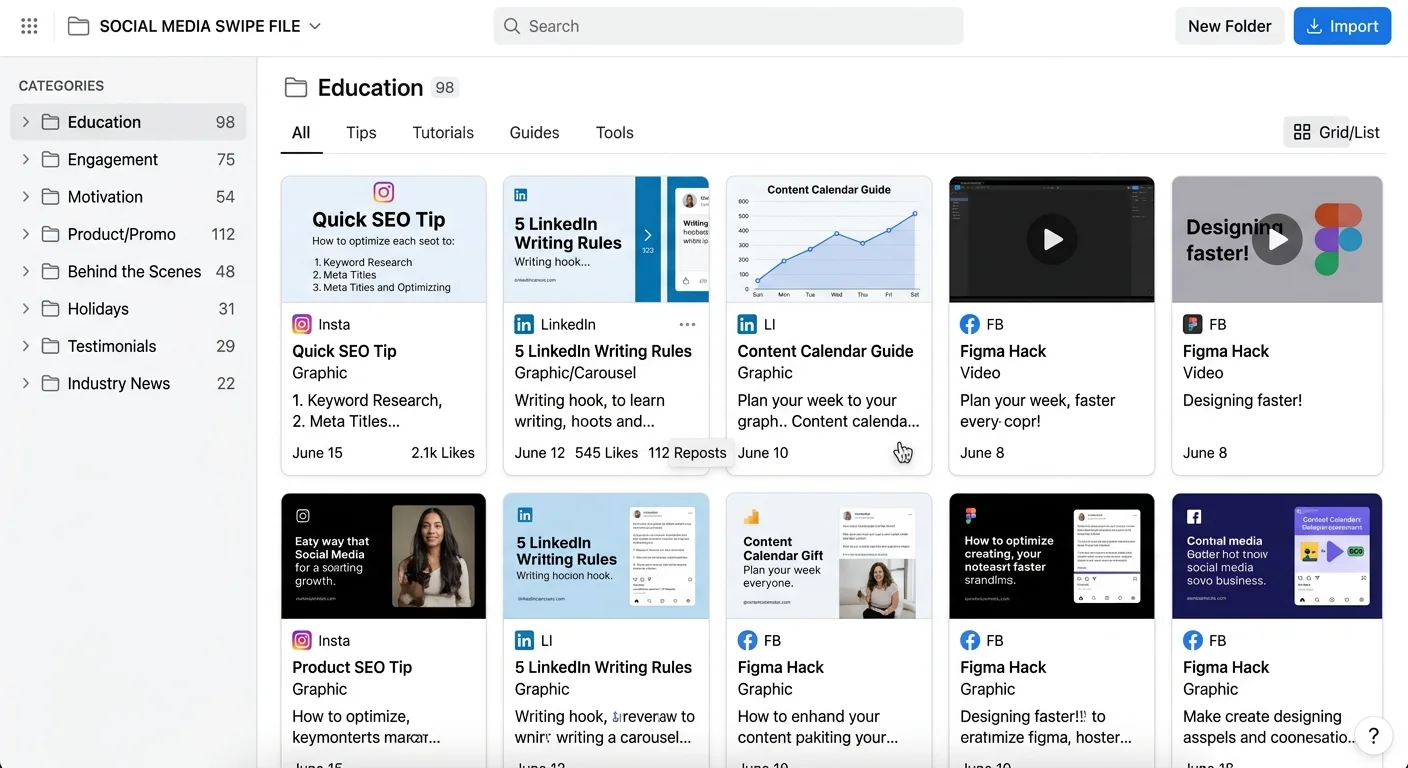
Every professional copywriter maintains a swipe file, which is a collection of high-performing posts, headlines, and CTAs they can reference for inspiration. Create a folder on your phone or computer and save every social post that makes you stop scrolling, click a link, or feel compelled to comment. Organize it by platform, topic, and what made it effective. When you sit down to write, open your swipe file first. You're not copying; you're studying structure, tone, and psychological patterns that have already proven effective.
Review your swipe file monthly and look for evolving trends. Are more creators using storytelling hooks? Are list-style posts declining in favor of single-tip formats? Social media writing evolves constantly, and your swipe file acts as a real-time trend tracker. Combine this practice with the content creation framework you've built throughout this guide, and you'll find that drafting high-converting posts becomes faster and more intuitive with every iteration you complete.
Don't copy another creator's post word for word. Use swipe files for structural inspiration, not plagiarism.
Frequently Asked Questions
?How do I apply the Hook-Body-CTA framework to a short LinkedIn post?
?Is building a Voice of Customer doc worth it if I post infrequently?
?How long does it realistically take to build a swipe file that's actually useful?
?Won't using AI drafting tools make my social posts sound generic and lose my voice?
Final Thoughts
Social media writing that converts isn't about going viral or gaming algorithms. It's about understanding your audience deeply, structuring your posts with intention, choosing words that trigger action, and refining your approach through real data.
The four steps in this guide give you a repeatable system that improves every time you use it. Start with one platform, master the Hook-Body-CTA framework, and build from there. Your next post draft could be the one that changes your growth trajectory.
Disclaimer: Portions of this content may have been generated using AI tools to enhance clarity and brevity. While reviewed by a human, independent verification is encouraged.