Content creation tips can transform the way you write, draft, and publish across blogs and social media platforms. Whether you're producing weekly blog posts or daily social updates, the drafting process often feels scattered and time-consuming. Most content creators spend more time organizing their thoughts than actually writing. That's a workflow problem, not a talent problem.
When your process is structured, your output improves in both quality and speed. This guide walks you through four practical steps to streamline your content creation workflow, from planning and drafting to structuring and publishing. Each step includes specific, actionable advice you can apply to your next piece of content. If you've been looking for a faster, more reliable way to produce posts that resonate with your audience, you're in the right place.
Key Takeaways
- Batch your content planning sessions to reduce daily decision fatigue and save hours weekly.
- Use templates for blog and social media posts to maintain consistent post structure.
- Write rough drafts without editing to keep creative momentum flowing forward.
- Repurpose each blog post into at least three social media writing pieces.
- Automate repetitive formatting tasks so you can focus on original ideas and storytelling.
1. Plan Your Content Calendar in Batches
The single biggest time drain for content creators isn't writing itself. It's deciding what to write about, every single day. Batch planning eliminates that friction by front-loading your creative decisions into a single focused session. Block out 60 to 90 minutes once a month, and you'll walk away with four to eight weeks of topics ready to go. This approach also helps you spot gaps in your content strategy before they become publishing emergencies.
Choosing Themes and Topics
Start by identifying three to five core themes that align with your audience's interests and your expertise. For a marketing blog, these might include SEO fundamentals, email strategy, social media writing, and content repurposing. Within each theme, brainstorm specific angles. For example, under "content repurposing," you might plan posts about turning webinars into blog drafts, converting case studies into LinkedIn carousels, and adapting long-form articles into tweet threads. This approach, similar to AI-powered post draft generation workflows, gives you a structured framework that makes the actual writing far more predictable.
Keep a running "idea bank" in a simple spreadsheet or note app, and add to it whenever inspiration strikes.
Setting Realistic Publishing Cadence
A common mistake is overcommitting. Publishing five blog posts a week sounds ambitious, but most solo creators burn out within a month at that pace. Two to three high-quality posts per week outperform daily low-effort content in nearly every metric. Match your cadence to your actual capacity, factoring in research, drafting, editing, and promotion time. A realistic schedule you can sustain for six months will always beat an aggressive one you abandon after three weeks.
Once your calendar is set, assign each topic a target publish date and a draft deadline at least three days earlier. That buffer gives you time to revise without the stress of same-day publishing. Use color coding to distinguish between blog posts, social content, and email newsletters. The visual clarity helps you maintain balance across formats and prevents you from neglecting any single channel for too long.
2. Build Reusable Templates for Every Format
Templates aren't about copying the same structure mindlessly. They're about eliminating the blank-page problem so you can focus your energy on what matters: the ideas themselves. A good template provides guardrails without restricting creativity. Think of it as a skeleton that you flesh out differently every time, depending on the topic and audience. If you want a deeper look at how structure improves your output, check out post structure basics every content creator needs.
Blog Post Templates
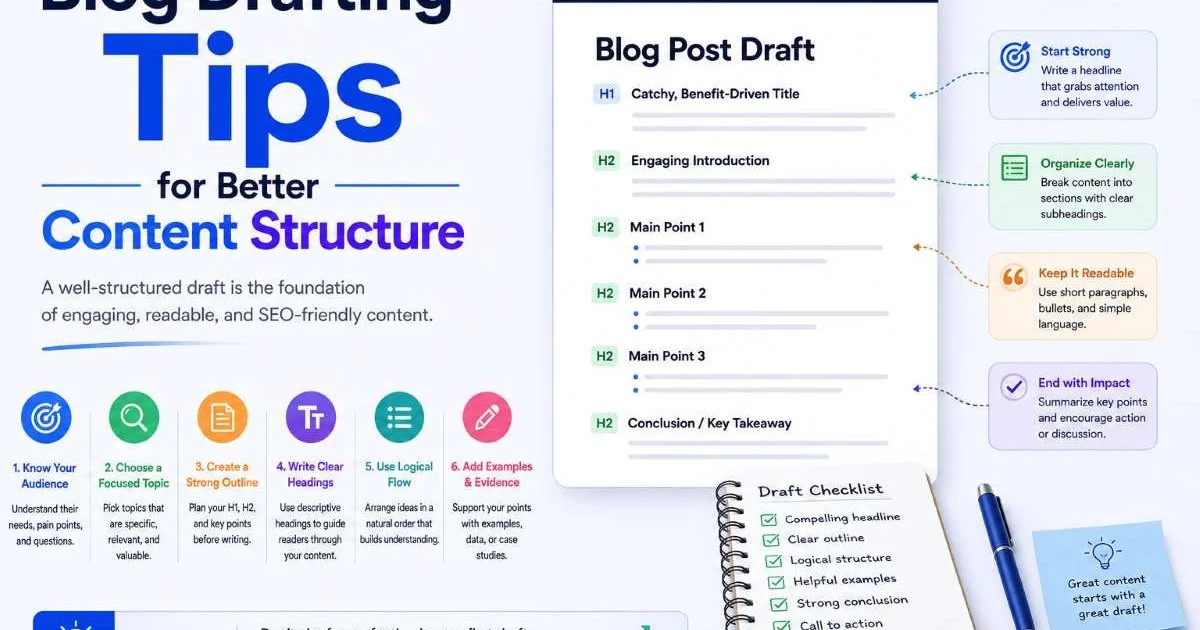
For blog content, create templates for your three or four most common post types. A how-to guide template might include sections for introduction, numbered steps, a summary table, and a conclusion. A listicle template might feature a hook paragraph, numbered items with subheadings, and a call to action. Save these as documents in your writing tool of choice. When it's time to write, open the relevant template, fill in the specifics, and you've already skipped past 20 minutes of structural decision-making. For more on this, blog drafting tips for better content structure covers the topic in detail.
Social Media Templates
Social media writing benefits even more from templates because you're producing higher volume at shorter lengths. A LinkedIn post template might follow the pattern: attention-grabbing first line, three to five lines of insight, a personal anecdote, and a closing question. For Twitter/X threads, your template might specify a hook tweet, five supporting tweets with one key point each, and a summary tweet with a call to action. These frameworks let you craft social posts that convert without reinventing your approach every single time.
Store your templates in a shared workspace so team members or virtual assistants can use the same formats consistently.
The real power of templates shows up over months of use. When you look back at 50 posts built from the same template, you can easily identify which structural elements perform best. Maybe your how-to posts with summary tables get 40% more shares. Maybe LinkedIn posts with questions at the end get three times more comments. Templates give you a controlled variable, making it far easier to isolate what's actually driving engagement.
3. Draft Fast, Then Edit Deliberately
Speed in drafting and quality in editing are two separate skills that happen at two separate times. Too many writers try to do both at once, pausing mid-sentence to rephrase, deleting entire paragraphs before finishing the first pass. This kills momentum and inflates production time. The most productive content creators treat drafting and editing as distinct phases with different rules, different mindsets, and different tools.
The Zero-Draft Method
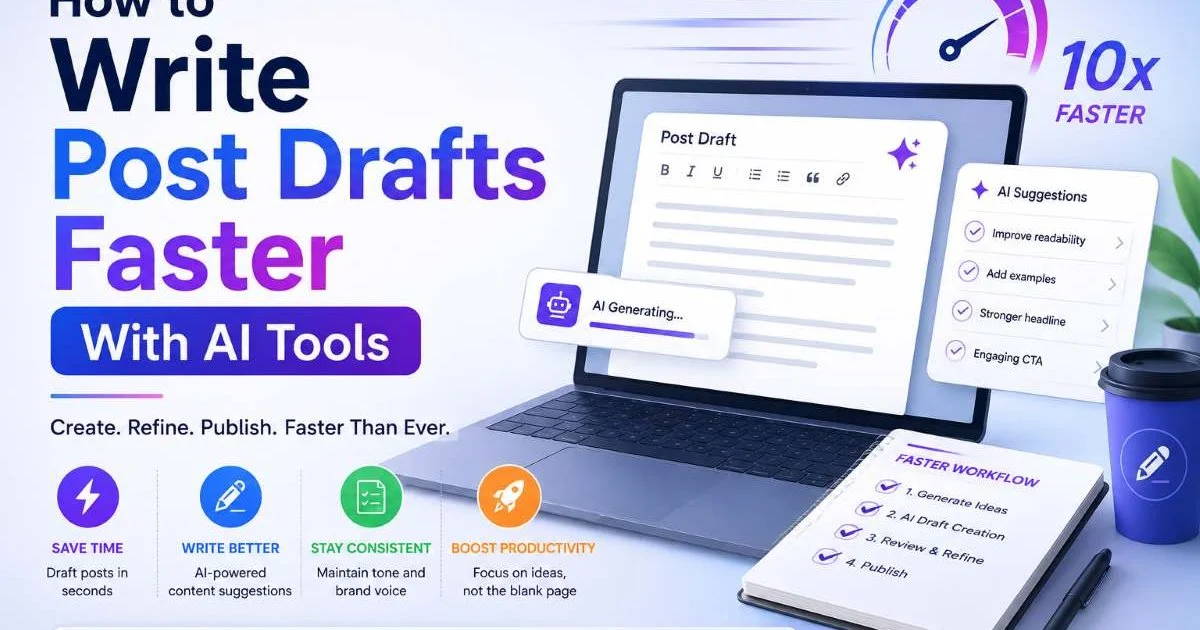
The zero-draft approach means writing your first version with zero concern for perfection. Turn off your spell checker. Ignore grammar. Use placeholder brackets like "[find stat]" or "[add example]" when you don't have information at your fingertips. The goal is to get your complete thought structure onto the page as quickly as possible. Many creators find that writing post drafts faster with AI tools complements this method beautifully, since AI can help generate rough outlines or fill in sections that you can then refine with your own voice.
"The fastest path to a polished post is an imperfect first draft written without hesitation."
Set a timer for your drafting sessions. A 1,500-word blog post should take no more than 45 to 60 minutes in zero-draft mode. If you're spending longer than that, you're probably editing as you go. Train yourself to push forward. The rough spots will get fixed later. Speed drafting also tends to produce more natural, conversational writing because you're capturing the way you actually think, not the way you think you should sound.
Structured Editing Passes
Once your draft exists, switch gears entirely. Edit in multiple passes, each focused on a single dimension. Pass one: structure and flow. Are your sections in the right order? Does each paragraph lead logically to the next? Pass two: clarity and concision. Cut unnecessary words, simplify complex sentences, and replace vague language with specific details. Pass three: polish. Check grammar, formatting, links, and images. This layered approach is faster than trying to catch everything in a single read-through.
After your three editing passes, let the draft sit for at least a few hours before your final review. Fresh eyes catch errors that familiarity hides. If you're on a tight deadline, even a 30-minute break helps. Read the piece aloud during your final pass. Your ear will catch awkward phrasing, run-on sentences, and tonal inconsistencies that your eyes gloss over. This small habit consistently produces better final output.
Reading aloud works especially well for social media content, where conversational tone matters more than formal precision.
4. Repurpose and Distribute Strategically
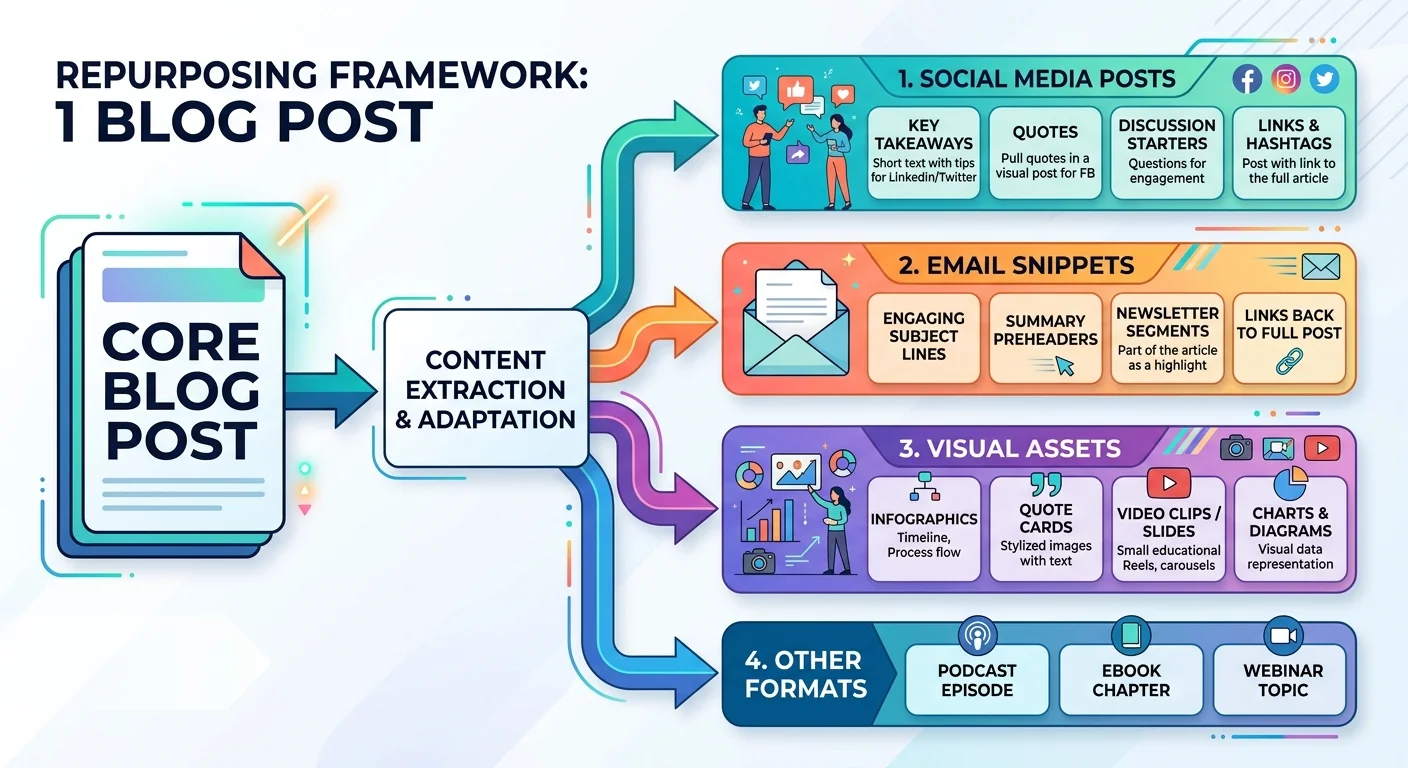
Creating one great piece of content and using it once is a waste of effort. Every blog post you publish contains enough material for multiple social media posts, an email newsletter section, and possibly a short video script. Strategic repurposing multiplies your output without multiplying your workload. The key is building repurposing into your workflow from the start, not treating it as an afterthought. Understanding how agent-based workflows handle multi-step content tasks can give you a useful mental model for your own repurposing pipeline.
Breaking Down Blog Content
Take a 1,500-word how-to blog post. Each numbered step can become a standalone social media post with a brief explanation and a link back to the full article. Your summary table can become an infographic. A particularly strong paragraph can become a quote graphic. Your introduction, rewritten slightly, works as an email teaser. From a single blog post, you can realistically extract five to eight individual content pieces across different platforms with minimal additional writing.
Build a repurposing checklist for each content type. After publishing a blog post, run through the list: extract three social posts, create one email snippet, identify one visual asset opportunity. This takes 15 to 20 minutes per article. Over a month of weekly publishing, that's just one extra hour for potentially 12 to 16 additional content pieces. The return on time investment is extraordinary, especially for solo creators managing multiple channels.
Matching Format to Platform
Not every repurposed piece works on every platform. LinkedIn favors professional insights, personal stories, and data-driven takeaways between 150 and 300 words. Twitter/X rewards concise, punchy statements and threads with clear formatting. Instagram demands visual-first content where text supports the image, not the other way around. When you repurpose, adapt the format and tone to match the platform rather than simply copy-pasting the same text everywhere.
Track which repurposed formats generate the most engagement on each platform. You might discover that your audience responds best to data highlights on LinkedIn but prefers storytelling excerpts on Instagram. Use these insights to refine your repurposing templates over time. The content creation tips that matter most aren't about working harder. They're about working smarter by letting each piece of writing serve multiple purposes across your entire content ecosystem.
Avoid posting identical content across all platforms. Audiences notice, and algorithms penalize duplicate text.
Frequently Asked Questions
?How long should a batch planning session actually take?
?Is publishing 2-3 posts weekly better than posting every day?
?How much time can batch planning realistically save each week?
?Does using blog post templates hurt the originality of your writing?
Final Thoughts
Streamlining your content creation workflow isn't about cutting corners. It's about removing unnecessary friction so your best ideas reach your audience consistently. Plan in batches, build templates, draft without hesitation, and repurpose everything worth sharing.
These four steps compound over time, turning a chaotic publishing process into a reliable system. Start with whichever step addresses your biggest bottleneck right now, and layer in the others as each one becomes second nature.